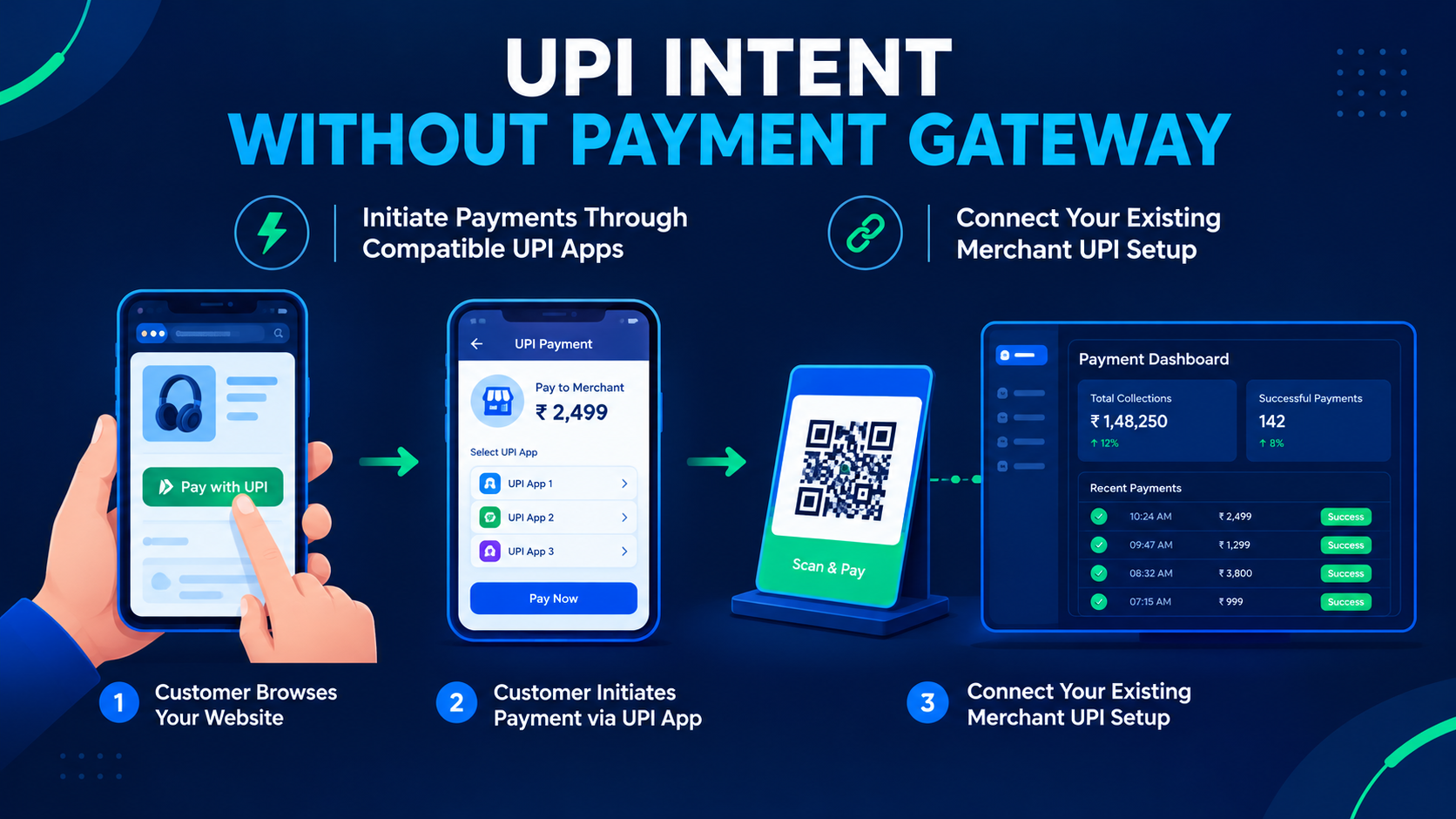
UPI Intent Without Payment Gateway: A Complete Guide for Businesses
Online payments have become an essential part of running a website, mobile application, or e-commerce business in India. With the growing popularity of Unified Payments Interface (UPI), customers expect a fast, convenient, and familiar way to pay for products and services.
However, many businesses want to simplify their payment process without adopting a conventional payment gateway setup. This is where the concept of UPI Intent Without Payment Gateway becomes relevant.
By using a supported UPI integration with an existing merchant setup, businesses can explore alternative ways to initiate payments and simplify payment collection. Solutions such as JaduPe help businesses connect their existing Merchant UPI ID or QR code with payment automation technology.
In this guide, we will explain how UPI intent works, how businesses can use it, and what to consider before integrating it into a website or application.
What Is UPI Intent Without Payment Gateway?
UPI intent is a payment method that allows customers to initiate a UPI transaction through a compatible UPI application installed on their mobile device.
When a customer selects a UPI payment option, the system can open a supported UPI app with payment details pre-filled, where supported. The customer reviews the details and authorizes the payment within the UPI application.
The term UPI Intent Without Payment Gateway generally refers to a payment flow that uses UPI intent without relying on a conventional full-service payment gateway for every part of the integration.
Depending on the implementation, a business may use a supported merchant payment setup, UPI deep links, QR codes, and integration software to facilitate payments. However, initiating a payment and verifying that it was successfully completed are two different processes. Businesses need a reliable, supported method to confirm payment status.
How Does UPI Intent Work?
UPI intent provides a convenient way for customers to move from a website or application to their preferred supported UPI app.
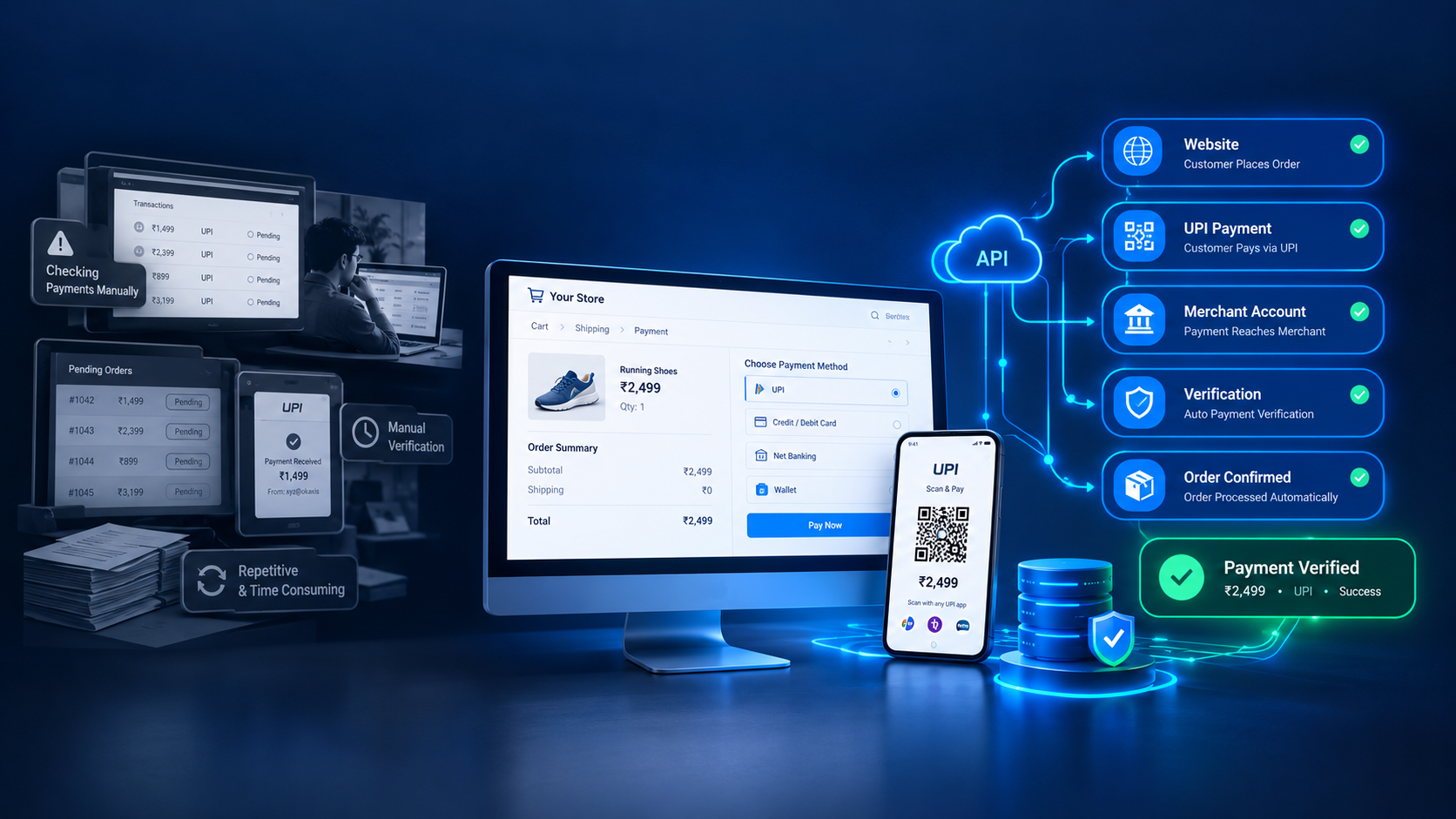
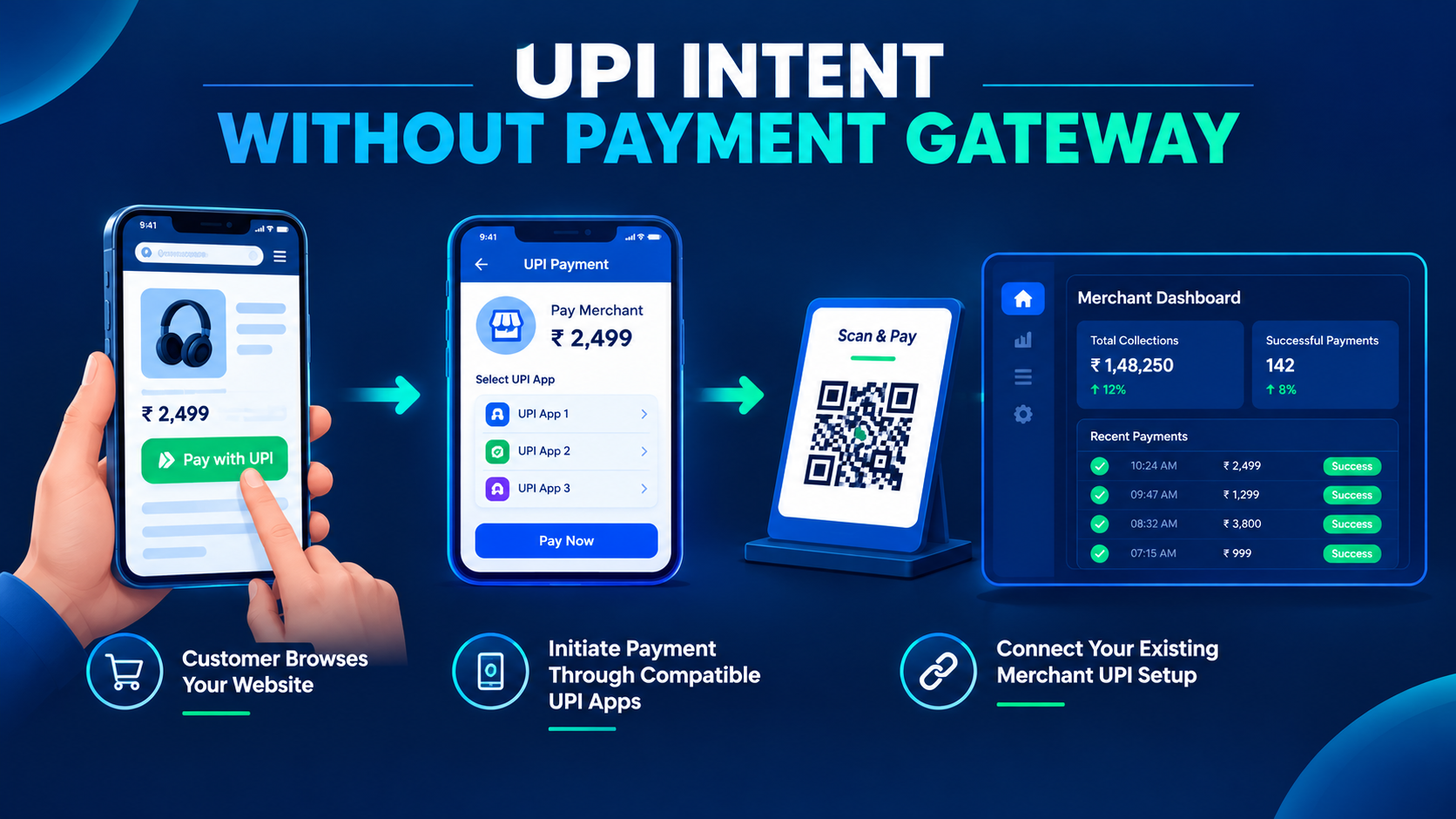
Here is how a typical UPI intent payment flow works:
-
Customer Places an Order: A customer selects a product or service on your website or mobile application.
-
UPI Payment Option Appears: The checkout page presents a supported UPI payment option.
-
UPI App Opens: The customer is redirected to a compatible UPI application with the required payment details, where supported.
-
Customer Authorizes Payment: The customer reviews the transaction and completes the authorization in the UPI app.
-
Payment Status Is Checked: The business uses its supported payment verification method to determine whether the transaction was successful.
-
Order Status Is Updated: Once payment is reliably confirmed, the website or application can update the order accordingly.
This workflow can help businesses provide a smoother checkout experience while reducing unnecessary steps for customers.
Can You Accept UPI Payments Without a Traditional Payment Gateway?
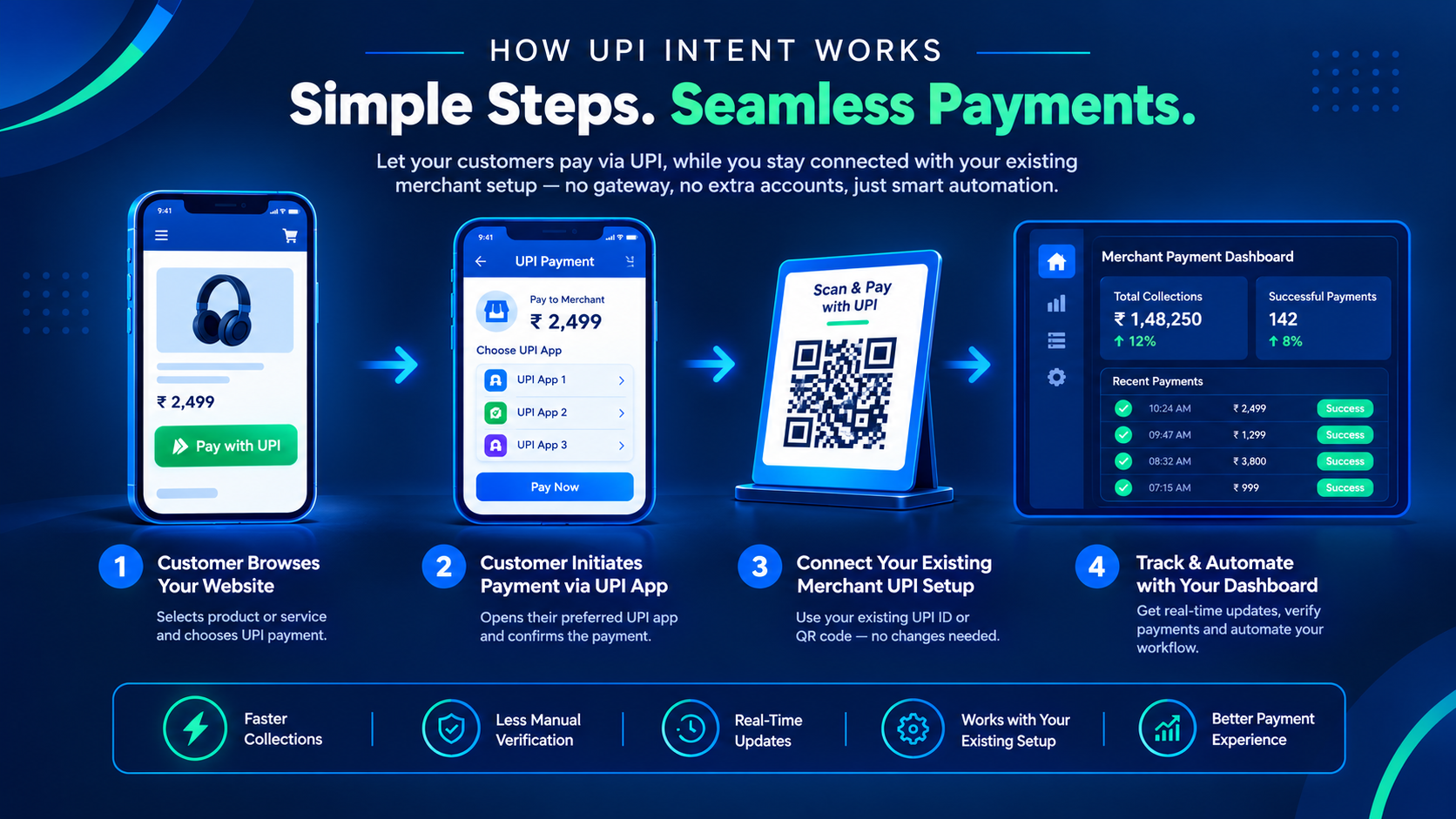
Yes, certain UPI payment flows can be implemented without integrating a conventional payment gateway, but the available options depend on your merchant account, payment method, and technical setup.
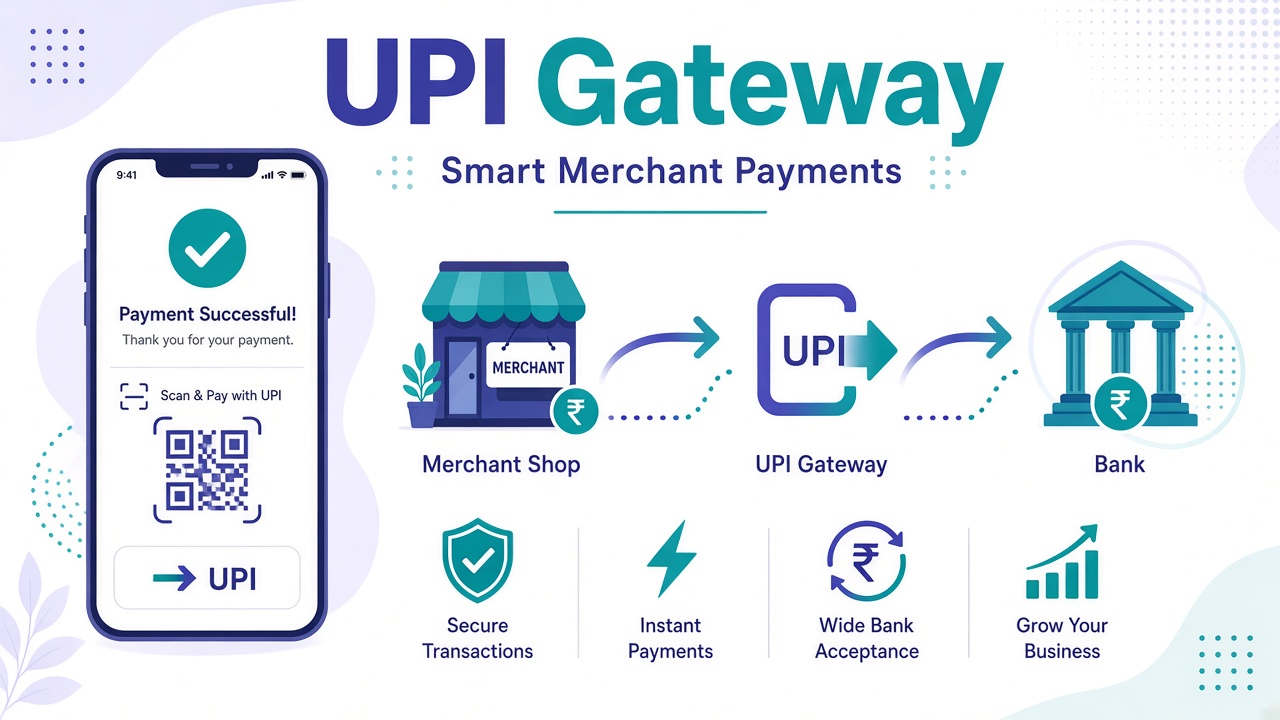
For example, a business may use a supported merchant UPI ID or QR code to facilitate payment collection. UPI intent can help customers initiate transactions through compatible payment applications.
However, businesses should understand the following points before choosing this approach:
-
A supported merchant setup may be required to accept business payments.
-
UPI intent alone does not confirm that a payment has succeeded.
-
Automated verification requires a reliable and authorized payment-status verification mechanism.
-
Merchant account terms, applicable payment rules, and compliance requirements still apply.
-
Some integrations may require a payment service provider or other authorized technical infrastructure.
Therefore, the right solution depends on whether your business needs basic UPI payment initiation, automated payment verification, or a complete payment integration workflow.
Benefits of UPI Intent Integration for Businesses
1. A Convenient Payment Experience
UPI intent can reduce the steps required to initiate a payment on compatible mobile devices. Customers can move from checkout to their preferred UPI app without manually entering all payment details when the integration supports pre-filled information.
2. Integration With an Existing Merchant Setup
Businesses may be able to build a UPI-focused payment workflow around their supported existing Merchant UPI ID or QR code instead of replacing their entire payment setup. The available functionality depends on the merchant account and integration method.
3. Less Manual Payment Verification
Manual verification can become time-consuming when a business receives many orders. With a suitable payment verification integration, businesses can reduce their reliance on customer-submitted screenshots and repetitive manual checks.
4. Website and Mobile App Support
UPI payment integration can be useful for e-commerce stores, service platforms, mobile applications, and other online businesses that accept UPI payments.
5. A More Organized Payment Workflow
Connecting order creation, payment initiation, payment-status checks, and order updates can help businesses manage their payment process more consistently.
UPI Intent vs. UPI QR Code Payments
Both UPI intent and UPI QR codes can help customers make UPI payments, but they work differently.
UPI Intent: This method can open a compatible UPI application directly from a supported payment flow. It is particularly useful on mobile devices.
UPI QR Code: The customer scans a displayed QR code using a compatible UPI application to initiate a payment. QR codes can be useful across mobile and desktop checkout experiences.
Businesses may choose one method or offer both, depending on their customers, devices, merchant setup, and integration requirements.
How JaduPe Helps With UPI Payment Automation
JaduPe helps businesses connect their existing Merchant UPI ID or QR code with smart payment automation technology.
Instead of focusing only on payment initiation, businesses can explore a more organized workflow for collecting payments and managing payment verification on their websites or applications.
Depending on the supported integration and features available, JaduPe can help businesses work toward the following objectives:
-
Connect an existing supported Merchant UPI ID or business QR code.
-
Integrate UPI-focused payment options into a website or application.
-
Reduce repetitive manual work associated with payment verification.
-
Use supported integration tools and APIs to connect payment workflows.
-
Improve the overall payment experience for customers.
JaduPe is designed around payment automation using an existing merchant setup. The exact integration requirements and verification capabilities depend on the features available for the business.
If you want to explore a UPI-focused payment integration for your website or app, visit JaduPe and review the available options.
Get started: https://jadupe.in/register
Who Can Benefit From UPI Intent Integration?
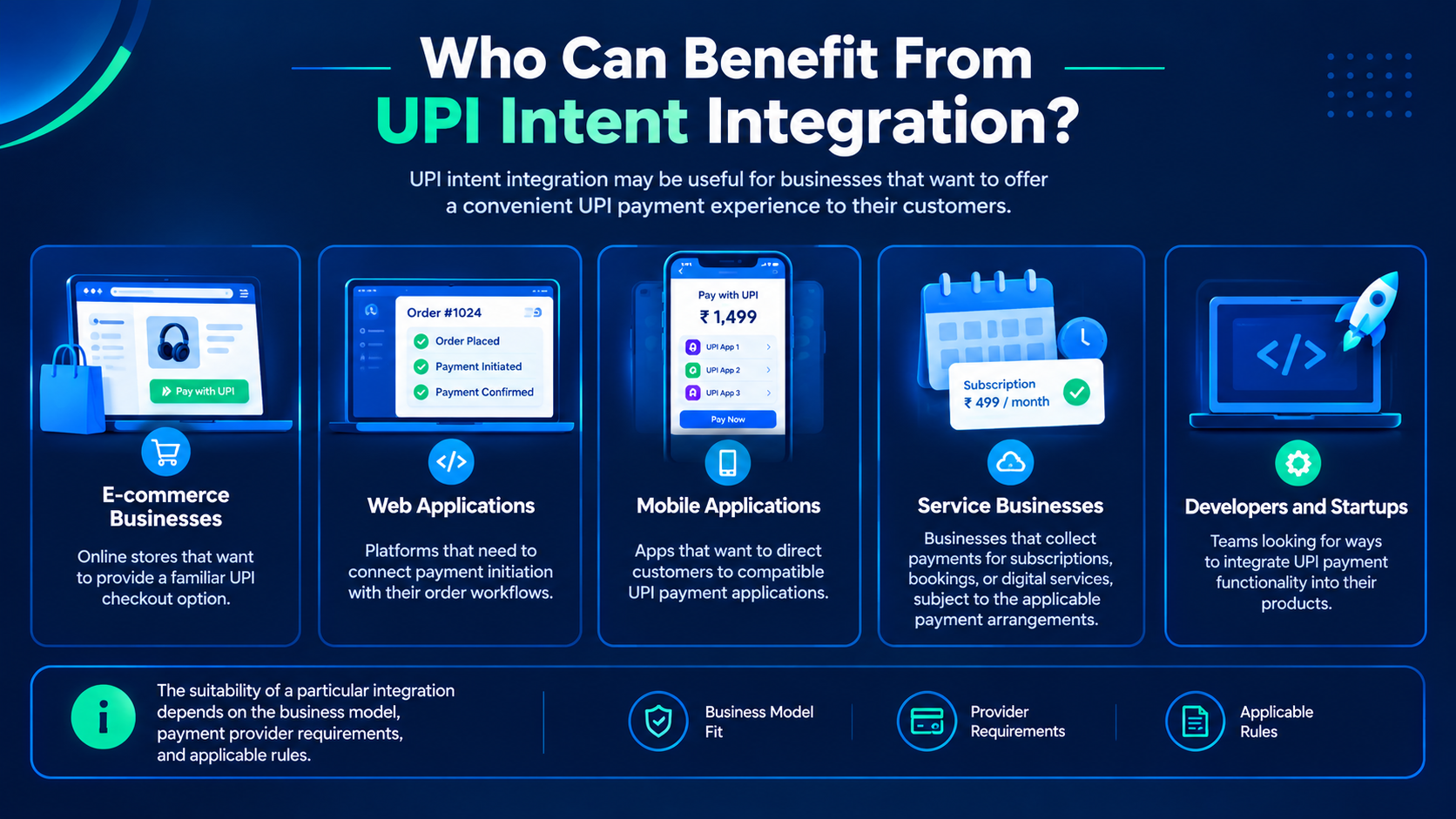
UPI intent integration may be useful for businesses that want to offer a convenient UPI payment experience to their customers.
Examples include:
-
E-commerce Businesses: Online stores that want to provide a familiar UPI checkout option.
-
Web Applications: Platforms that need to connect payment initiation with their order workflows.
-
Mobile Applications: Apps that want to direct customers to compatible UPI payment applications.
-
Service Businesses: Businesses that collect payments for subscriptions, bookings, or digital services, subject to the applicable payment arrangements.
-
Developers and Startups: Teams looking for ways to integrate UPI payment functionality into their products.
The suitability of a particular integration depends on the business model, payment provider requirements, and applicable rules.
Important Things to Consider Before Integration
Before implementing UPI intent without a conventional payment gateway, consider the following:
Payment Confirmation: Do not mark an order as paid solely because the customer returns to your website or shares a payment screenshot. Use a reliable, supported verification method.
Duplicate Transactions: Your application should handle repeated callbacks, refreshes, and duplicate notifications carefully.
Failed or Pending Payments: Your system should have a process for handling transactions that are pending, failed, or not yet confirmed.
Merchant Eligibility: Confirm that your merchant account and chosen payment flow support the intended business use.
Security and Compliance: Protect transaction data, use authorized integration methods, and follow applicable payment network requirements and merchant terms.
Planning these areas in advance can help reduce payment-related errors and improve the customer experience.
Frequently Asked Questions (FAQs)
1. What is UPI Intent Without Payment Gateway?
It refers to a UPI payment flow that lets customers initiate payments through compatible UPI apps without relying on a conventional full-service payment gateway for every part of the process. The implementation and verification options depend on the merchant setup.
2. Can I use UPI intent on my website?
Yes. UPI intent can be integrated into supported website payment flows, particularly for customers using compatible mobile devices. A separate QR code option may be more practical for customers browsing on desktop computers.
3. Does UPI intent automatically verify payments?
No. UPI intent initiates a payment flow; it does not independently establish that the payment succeeded. Businesses need a reliable and supported method to verify transaction status.
4. Can I use my existing Merchant UPI ID?
Depending on your merchant account and the integration offered, you may be able to connect your existing Merchant UPI ID or business QR code. Confirm the supported setup and requirements before implementation.
5. Is UPI intent suitable for mobile applications?
Yes. UPI intent can provide a convenient payment experience in supported mobile applications by allowing customers to open compatible UPI apps and authorize transactions.
6. How does JaduPe help businesses?
JaduPe helps businesses connect their existing Merchant UPI ID or QR code with payment automation technology. Its goal is to simplify payment collection and reduce manual work through supported website and application integrations.
Conclusion
UPI Intent Without Payment Gateway can be a useful approach for businesses exploring alternatives to conventional payment gateway integrations. It can simplify payment initiation, support convenient mobile checkout, and work alongside an existing merchant payment setup where supported.
However, payment initiation and payment verification must be treated as separate steps. Businesses should choose a suitable integration that supports their merchant requirements, payment-status verification needs, and compliance obligations.
JaduPe helps businesses explore smart UPI payment automation using their existing Merchant UPI ID or QR code, making it easier to build a more organized payment experience for websites and applications.
Ready to explore UPI payment automation? Get started with JaduPe: https://jadupe.in/register