What is a UPI Gateway and How Does It Work in 2026? (A Complete Deep-Dive Guide)
If you are running any kind of online business in India right now—whether it is a bustling Shopify e-commerce store, a custom-built web application, a mobile game, or a digital service platform—you already know the massive headache that comes with collecting payments.
For the longest time, businesses had to rely completely on traditional Payment Gateways (PGs). But let’s be entirely honest: old-school payment gateways are broken for small and medium-sized businesses. They make you jump through endless compliance hoops, demand mountains of corporate paperwork, hold your funds for days under the guise of "settlement cycles," and worst of all, they bite off a clean 2% to 3% cut from every single sale you make.
Fortunately, the financial landscape has evolved aggressively. In 2026, the smartest Indian entrepreneurs are shifting away from traditional processors and moving toward a much leaner, faster, and incredibly cheap technology: the UPI Gateway.
But what exactly is a UPI Gateway? How does it differ fundamentally from the old way of doing things, and how can it protect your business margins? Let’s break it down comprehensively.
What is a UPI Gateway? (Understanding the Core Difference)
To truly understand what a UPI Gateway is, we first have to clarify what it is not. It is not a traditional payment gateway, even though it serves a similar purpose at checkout.
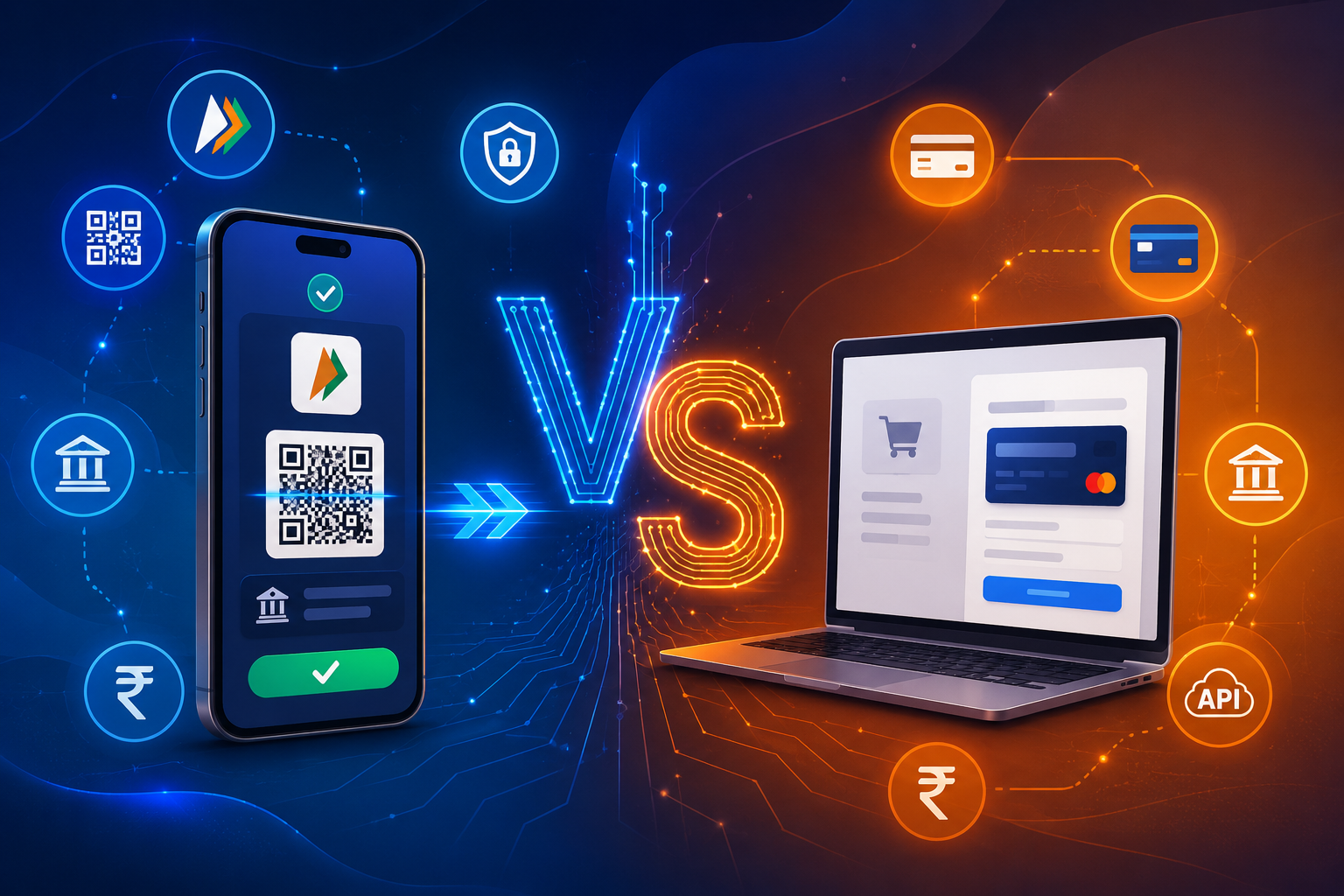
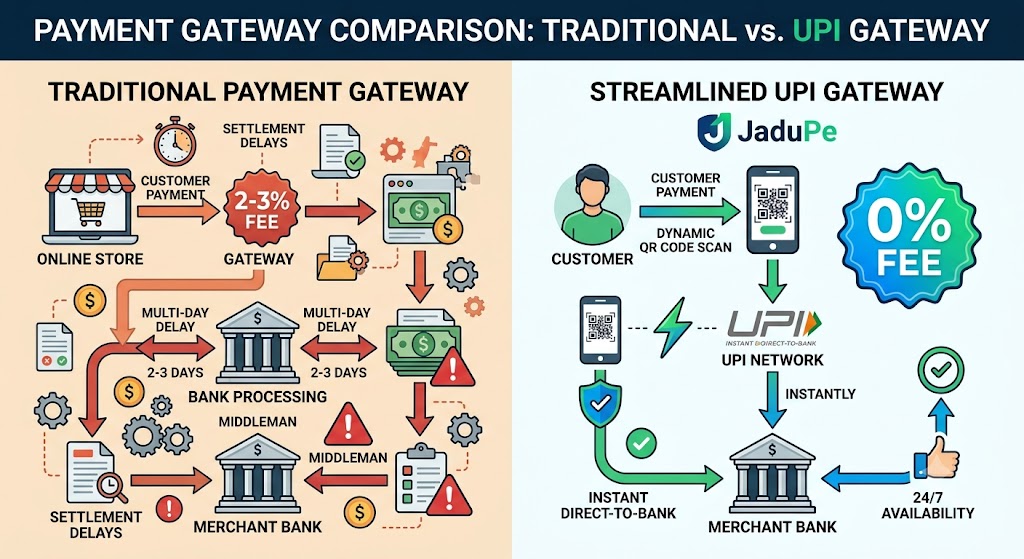
A traditional payment gateway acts as an escrow-style middleman. When a customer pays via credit card, debit card, or net banking, the traditional PG collects the money, stores it in their own merchant escrow accounts, processes it through various banking rails over 48 to 72 hours, and then eventually transfers it to your bank account after deducting their hefty cut.
A UPI Gateway—like JaduPe—completely rewrites this script.
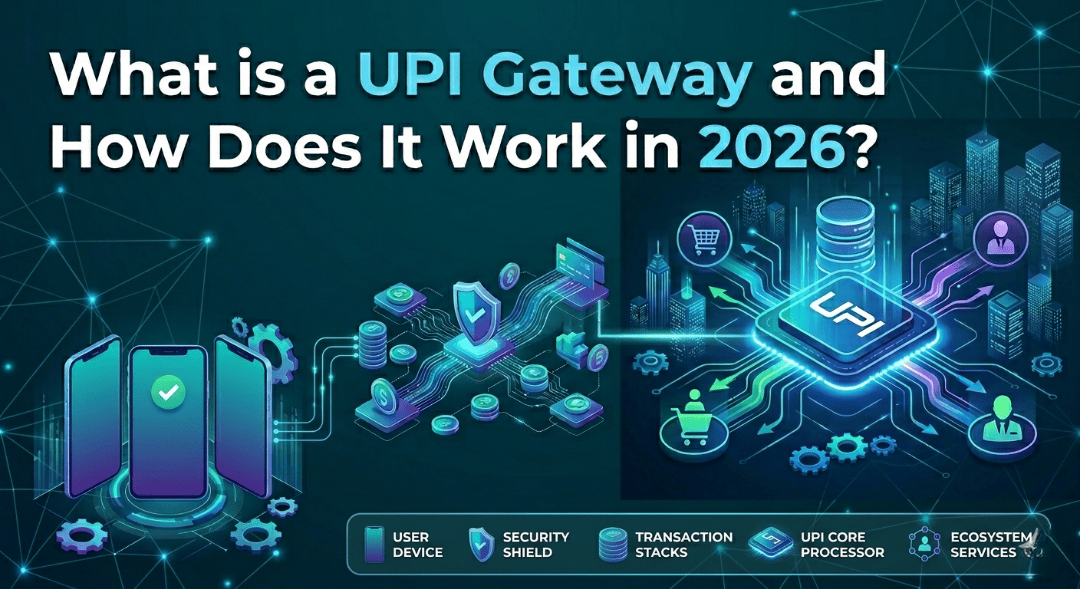
Instead of acting as an intermediary that touches your money, a UPI Gateway functions as an automated technology layer. It interfaces directly with the Unified Payments Interface (UPI) network to generate unique, order-specific payment triggers based on the UPI ID (VPA) that you provide in your admin dashboard. Because the gateway never actually absorbs or holds the customer's funds, the money moves peer-to-peer (P2P) or peer-to-merchant (P2M) directly. The cash goes straight from the customer's bank account into yours, completely bypassing the traditional holding period.
How Does a UPI Gateway Work? (The Step-by-Step Technical Journey)
The entire architecture behind a modern UPI gateway is built for sheer speed and minimalism. Even though it feels instant to the end-user, a highly coordinated sequence happens behind the scenes in less than a second.
Here is exactly how the process unfolds when a user hits the checkout page on your website or app:
Step 1: The Checkout Initiation
The customer populates their shopping cart and hits the "Pay" or "Buy Now" button. Your website or app communicates with the UPI gateway API, sending across vital transaction details like the unique Order ID and the exact billing amount.
Step 2: Generation of Dynamic Payment Parameters
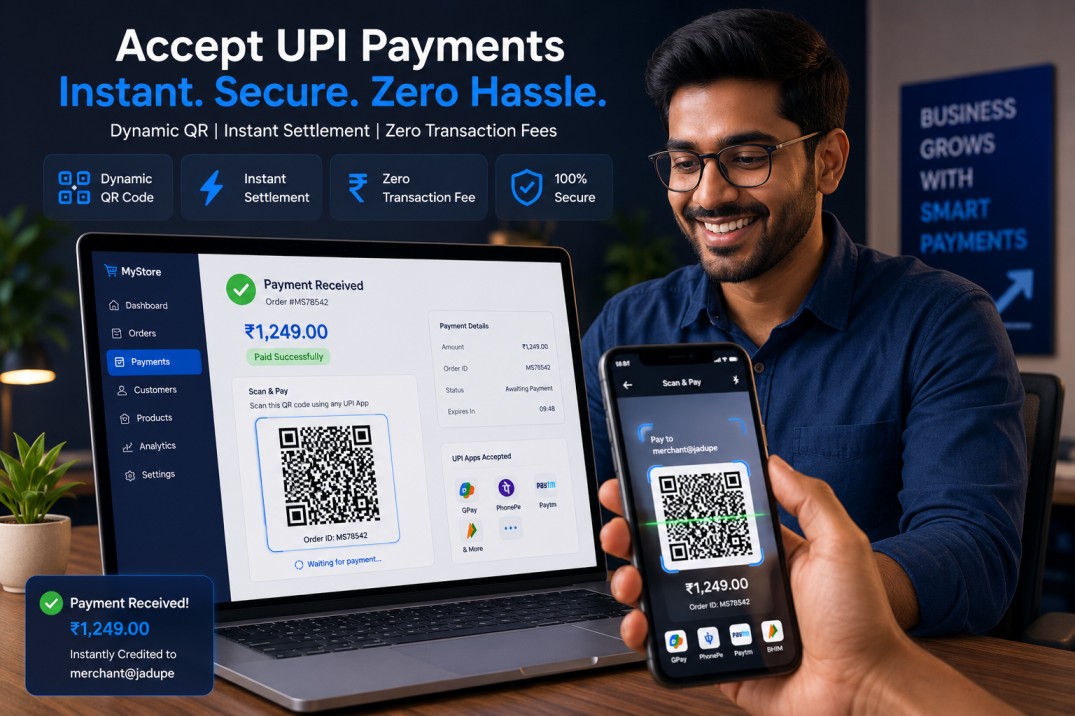
Unlike a static QR code sticker you see at a local grocery store (where the customer has to manually type in the amount), the UPI Gateway automatically generates a Dynamic QR Code or a UPI Intent link. This dynamic QR contains embedded cryptographic metadata detailing the exact payable amount and your specific merchant routing details.
Step 3: The Interaction / Payment Execution
-
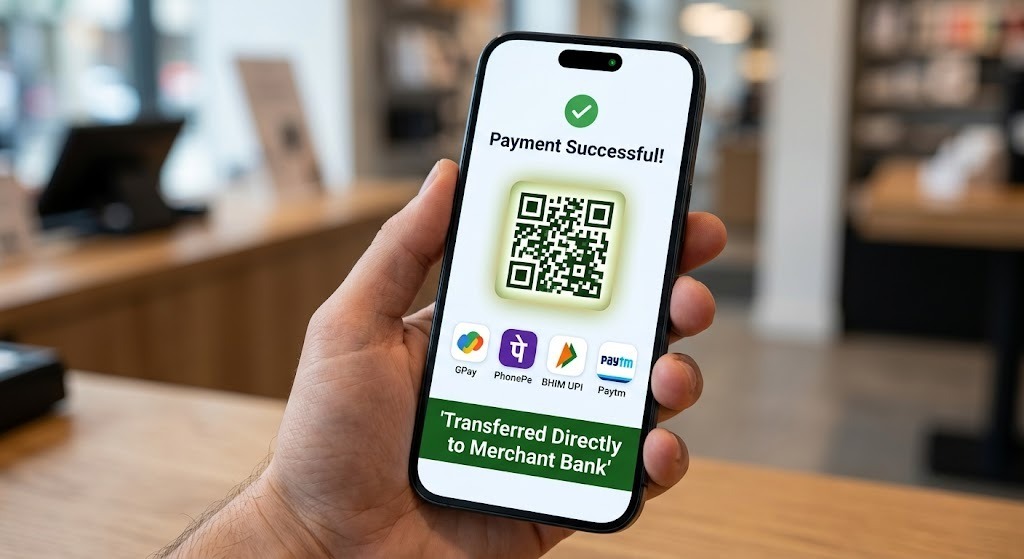
On Desktop: The customer sees a crisp, unique QR code on their screen. They pull out their phone, open any popular UPI app (such as Google Pay, PhonePe, Paytm, or BHIM), and scan it. The exact payment amount is automatically filled into their app—they don't have to type a single rupee.
-
On Mobile (UPI Intent): If they are shopping directly from their phone, they don't even need to scan anything. The gateway triggers a "UPI Intent" flow, which instantly brings up a drawer of available UPI apps installed on their phone. Clicking on PhonePe or GPay opens that app automatically with the payment page ready to go.
Step 4: Secure PIN Authorization
The customer enters their highly secure, private 4-digit or 6-digit UPI PIN within their chosen banking app. The transaction is instantly processed over the secure National Payments Corporation of India (NPCI) network.
Step 5: Real-Time Webhook Confirmation & Instant Settlement
The second the bank approves the transaction, two things happen simultaneously:
-
The money drops instantly into your linked bank account via your UPI ID.
-
The gateway fires off a secure notification called a "webhook" back to your website or e-commerce platform. This automatically updates your dashboard to "Paid," confirms the customer's order, and triggers your fulfillment workflow.
Deep Comparison: Traditional Payment Gateways vs. UPI Gateways
To put things into perspective, let’s look at how the traditional ecosystem stacks up against modern UPI gateway infrastructure across critical operational metrics:
| Operational Metric | Traditional Payment Gateways | UPI Gateways (e.g., JaduPe) |
|---|---|---|
| Transaction Charges (MDR) | High (Usually 2% to 3% plus GST on every single order) | 0% Zero Transaction Fees |
| Settlement Timelines | Standard T+2 or T+3 business days (can be longer on weekends) | Instant, Direct Transfer to your bank account |
| Onboarding & Compliance | Strict, heavy documentation (GST, corporate registration, extensive review) | Minimal hassle, fast approval based on active UPI accounts |
| Risk of Money Holds | High risk of frozen funds, rolling reserves, or arbitrary payout delays | Zero money holds because the platform never touches your capital |
| Integration Complexity | Often requires complex SDK configuration and lengthy testing | Under 5 minutes using clean, straightforward API structures |
| Payment Options Provided | Credit/Debit Cards, NetBanking, Wallets, and standard UPI | Dynamic UPI QR Codes and UPI Intent routing |
Why JaduPe is Leading India’s UPI Gateway Revolution
If you are eager to protect your profit margins and provide a frictionless checkout experience, JaduPe (jadupe.com) has built the ultimate solution specifically engineered for Indian business owners. JaduPe isn't trying to build another complex corporate payment monolith; instead, it provides a fast, transparent tool designed to maximize your cash flow.
Here is an in-depth look at what makes JaduPe India's premier UPI gateway provider:
1. Absolute Zero Transaction Fees
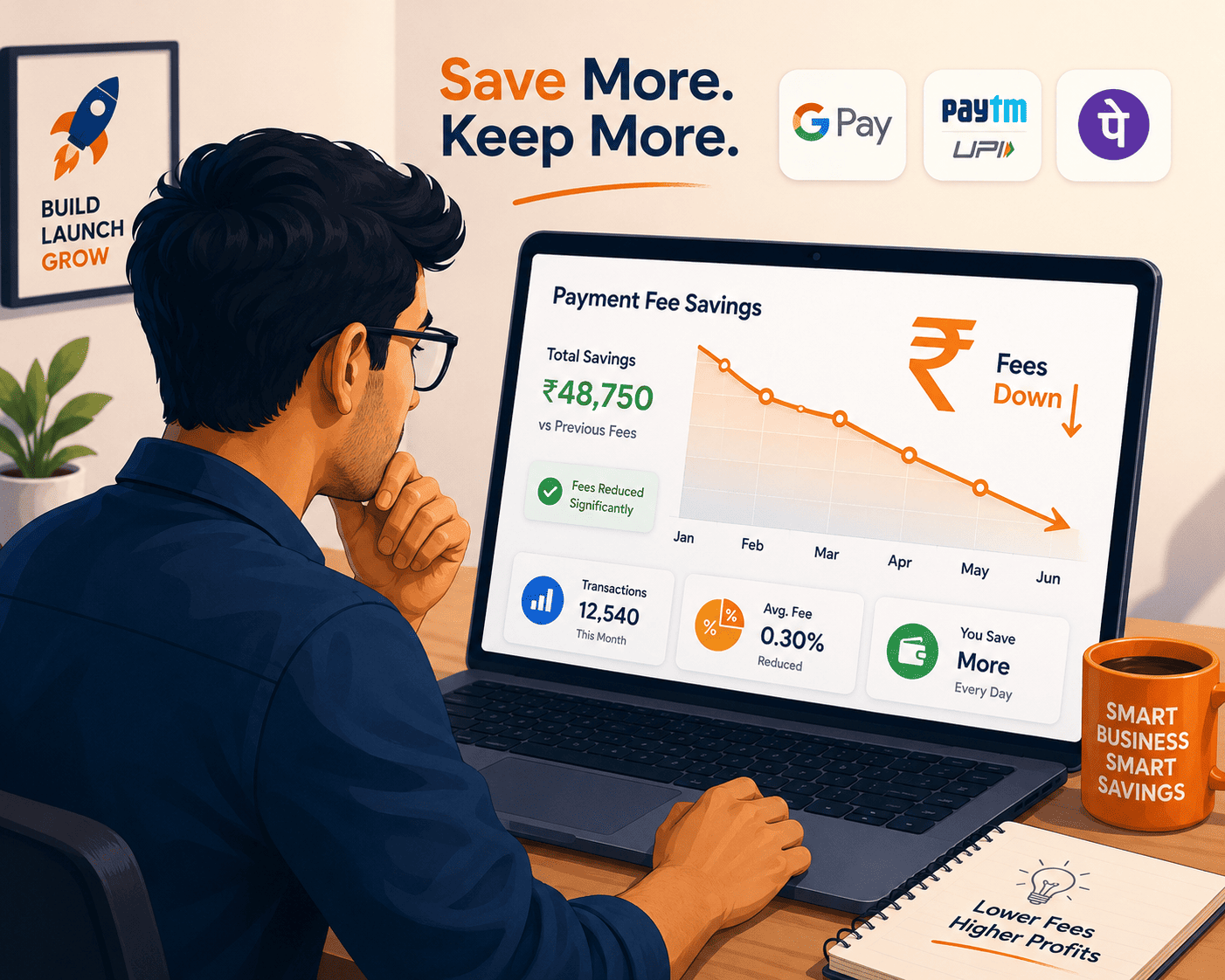
When you use an old-school payment gateway, your processing fees scale linearly with your success. If you make more sales, you pay more fees. JaduPe completely eliminates this tax on your growth. By operating a true zero-fee transaction model, you keep 100% of every rupee your customers spend.
2. Immediate Cash Liquidity (Instant Settlement)
Waiting days for a standard payment gateway to clear your payouts can absolutely kill your working capital, making it difficult to restock inventory or pay for running ads. Because JaduPe instantly routes payments right into your specified UPI ID (and therefore your direct bank account), your liquidity is real-time. The moment a sale happens, that money is available to spend on growing your business.
3. Rapid 5-Minute Integration
You don't need a massive team of software engineers or weeks of development sprints to start accepting payments. JaduPe is built for universal compatibility. It can be effortlessly integrated into custom websites, mobile apps, core e-commerce platforms, custom Shopify stores, or even legal mobile gaming ecosystems in under 5 minutes.
4. Minimal Onboarding Hassle
Traditional gateways put you through an exhausting compliance review that can take weeks, asking for heavy business certifications and financial histories. JaduPe strips away the corporate red tape. With minimal documentation required, you can get verified and go live almost instantly.
5. Highly Predictable, Flat-Rate Pricing
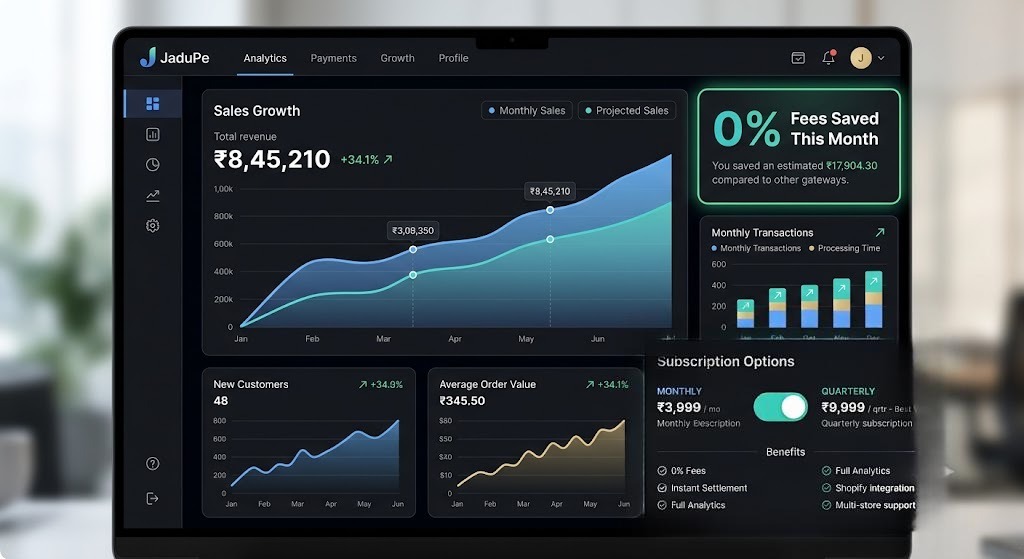
Instead of charging you a percentage of your revenue, JaduPe charges a very low, predictable subscription fee. With flat monthly and quarterly plans structured to fit any budget, you can accurately forecast your operational software costs. Whether you process ten transactions or ten thousand transactions a month, your platform cost remains completely unchanged.
The Ultimate Verdict: Is it Time for Your Business to Switch?
The financial reality of running an online business comes down to simple math. If your company processes ₹5,00,000 every month through a conventional payment gateway, you are throwing away roughly ₹10,000 to ₹15,000 every single month directly into the pockets of your payment processor. As your business scales up to ₹50,00,000 a month, you are looking at losing over a lakh of rupees monthly just for the privilege of moving your own money.
In 2026, consumer preferences are completely dominated by UPI due to its sheer convenience and speed. By aligning your backend operations with this consumer reality, you give your users their preferred checkout method while retaining your hard-earned revenue.
If you are ready to cut out the middlemen, eliminate transaction fees, and enjoy instant access to your funds, it is time to check out JaduPe.com and upgrade your payment infrastructure for the modern era.