If you are running a business in India right now, you have probably heard the term "UPI Gateway" thrown around a lot. But what exactly is it? Is it just a fancy term for scanning a QR code? Not quite.
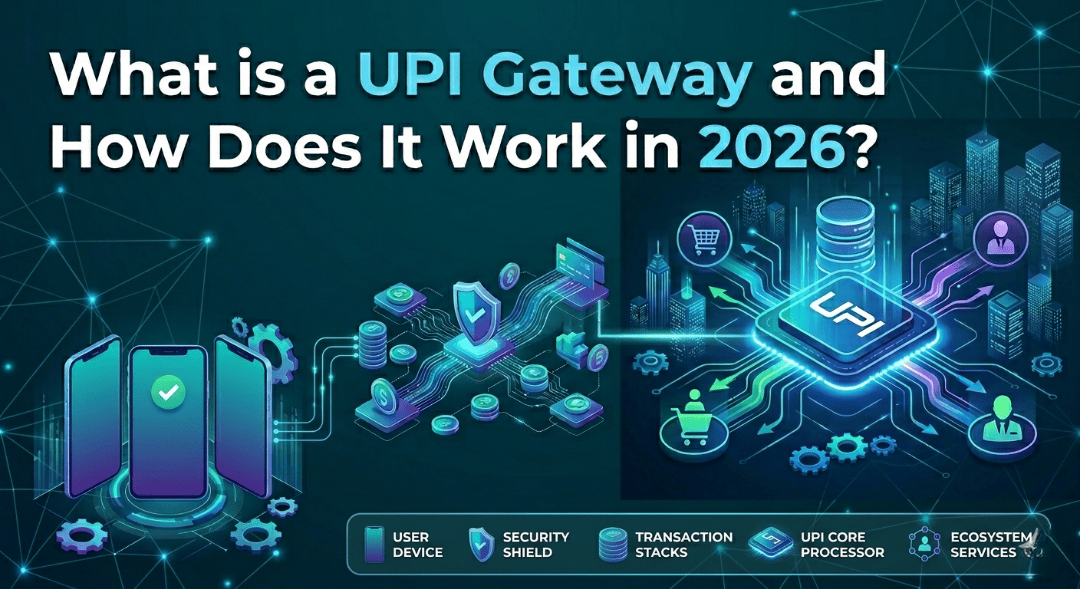
In simple words, a UPI Gateway is like the engine under the hood of your digital payment system. It allows you, the business owner, to accept money directly into your bank account via UPI, but without needing a traditional—and expensive—payment gateway.
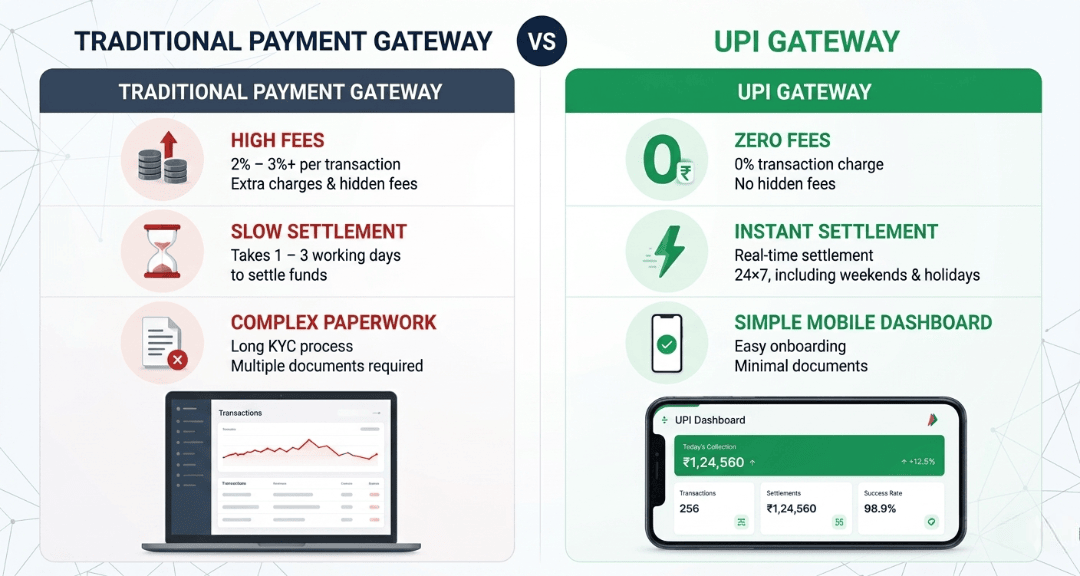
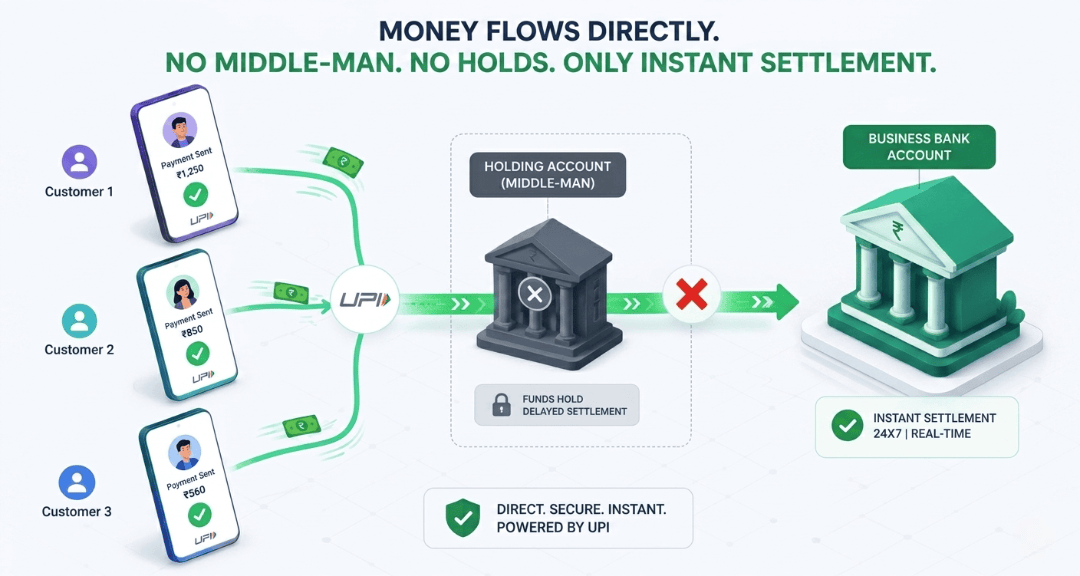
Unlike big gateways that hold your money for days and charge high fees, a UPI Gateway is direct. It generates dynamic QR codes and links that allow customers to pay instantly, and the money settles directly to your UPI ID. It is fast, cheap, and in 2026, it is the smartest way for Indian businesses to collect payments.
Understanding the Basics: UPI vs. Payment Gateway
To really get it, we need to break down the terms.
What is UPI?
UPI (Unified Payments Interface) is a system created by NPCI that allows you to transfer money between bank accounts instantly using just a mobile phone. It works 24/7, even on bank holidays, and you don't need to share your bank account number to receive money. Instead, you just share a UPI ID (like yourname@bank) or a QR code.
What is a Payment Gateway?
Traditionally, a payment gateway is a third-party service that acts as a bridge between your website and the banks to process credit cards, net banking, and other online payments. Think of it as a secure tunnel for data.
The UPI Gateway Difference (And Why it Matters)
A UPI Gateway combines the simplicity of UPI with the infrastructure of a gateway. But here is the catch: it doesn't process cards. It specifically manages UPI transactions.
This is where it gets interesting for businesses.
A UPI Gateway handles the technical side of generating QR codes and routing the payment request to the customer's UPI app (like Google Pay or PhonePe). When a customer scans your QR, the gateway sends a request to their app, they enter their UPI PIN, and the money moves.
However, as per the government mandate, there is usually zero MDR (Merchant Discount Rate) for standard UPI bank-to-bank transactions. This means the network isn't charging you a percentage of the transaction value. The only charges you usually see are platform fees for maintaining the technology
How Does a UPI Gateway Actually Work?
Let's walk through the lifecycle of a payment via a UPI Gateway like JaduPe.
1. The Merchant Creates a Request
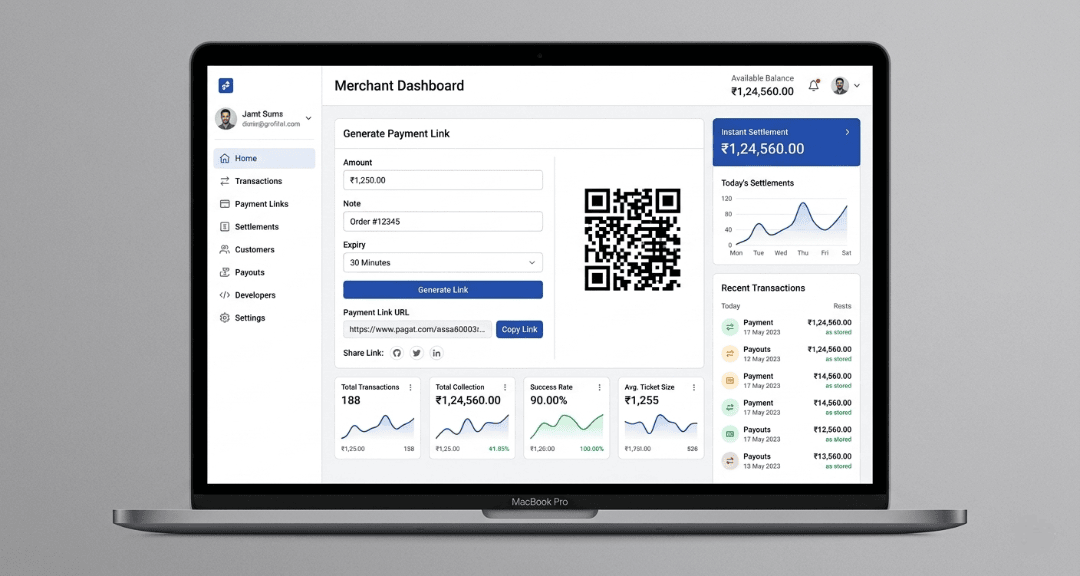
You log into your dashboard and enter the customer's UPI ID or the amount due. The gateway generates a unique, dynamic QR code or a UPI Intent link .
2. The Customer Pays
The customer scans the QR code with their preferred UPI app. On the backend, the gateway is sending a "collect" request or an "intent" to their app.
-
UPI Intent: This automatically opens the customer's UPI app (like PhonePe) with the merchant details and amount pre-filled. They just have to click "Pay".
-
UPI Collect: The merchant sends a payment request to the customer's UPI ID, and the customer gets a notification to approve and enter their PIN
3. Instant Settlement (The Game Changer)
Once the customer enters their UPI PIN, the transaction is complete. The money moves from the customer's bank account to the merchant's bank account instantly. With a traditional gateway, the money might sit in the bank's holding account for days. But with a UPI Gateway, it settles directly—often instantly—into your account.
Why are UPI Gateways like JaduPe Dominating in 2026?
The way we do business in India has changed. We don't want to wait 3 days for money to settle, and we don't want to pay 2% to 3% on every transaction just for the privilege of accepting cards
Here is why UPI Gateways are the future for SMBs, E-commerce stores, and even game developers:
-
Zero Transaction Fees (Literally): Because UPI has ZezeroDR, a well-designed UPI Gateway passes that benefit onto you. You don't pay a percentage of the sale amount. You just pay a very minimal fixed subscription cost or a small platform fee, which is significantly cheaper than the card networks.
-
Instant Settlement: This is the biggest flex. If you use a traditional gateway, your cash flow can get choked because of the T+2 or T+3 settlement cycles. With a UPI Gateway, the money hits your bank account right now.
-
No Paperwork Hassle: Big payment gateways often require piles of documents, GST certificates, and long legal agreements. Many UPI gateways allow you to start accepting payments with minimal documentation—often just your UPI ID and basic KYC. It takes about 5 minutes to integrate.
-
Dynamic QR: You are not stuck with a static QR code that only works for one amount. You can generate a new QR for every customer, for every amount, and even add a transaction note.
The Secret Sauce: How are they so cheap?
You might be thinking, "How can a company afford to offer a payment gateway for free or at such a low cost?"
As we touched upon earlier, the government has mandated Zero MDR for UPI payments. So, the network (NPCI and banks) isn't charging the merchant to move the money.
However, the company providing the software, server infrastructure, and security features (like fraud detection and dashboards) still has costs. That is why some providers charge a "Platform Fee", but here is the kicker: Platform fees are usually a fixed percentage or a flat fee per transaction, often less than 1% or a fixed subscription per month. They don't charge you 2%+ on every transaction, as traditional gateways do.
Integrating a UPI Gateway into your business
Whether you run a website, a Shopify store, or a mobile app, integration is usually a breeze. Most UPI Gateways offer APIs, SDKs, or plugins.
For example, if you are using WooCommerce, you can find plugins that simply add "UPI QR Code" as a payment method at checkout. The customer sees the QR code, scans it, and the order is marked as paid automatically.
Conclusion
In 2026, won't need to pay high fees to accept digital payments. The UPI Gateway is the perfect solution for Indian businesses that want to cut costs, improve cash flow, and provide a frictionless experience to their customers.
It's cheap, it's fast, and it's designed for the scale of India. If you are still using a traditional gateway for domestic digital payments, you are frankly leaving money on the table. This is your sign to switch to a gateway that works for you, not against you. It is easier than you think, and as we like to say, a UPI Gateway is the smartest and cheapest way to get paid in India.